Built From Real Operations
Not Just AI Trends
SPCTEK.AI was created from real business experience, not theory. Over the years, our team has worked closely with e-commerce brands, agencies, and digital businesses. We have helped teams manage operations, improve performance, and scale their systems while supporting companies generating over $25M in annual revenue.
What We Learned Along the Way
Through our years of hands-on work, we began to notice a consistent pattern.
Most businesses were not struggling because they lacked tools. They were struggling because their processes were unclear, fragmented, or disconnected.
Teams were operating across multiple platforms, leads were missed, workflows were inconsistent, and decisions were delayed because information was scattered.
At the same time, AI was rapidly gaining attention. Businesses wanted to adopt it, but many did not know where it actually fit within their operations.
We saw companies:
Trying AI without a clear process
Adding automation that did not align with workflows
Using too many disconnected tools
Facing more complexity instead of efficiency
This revealed a clear gap between AI's potential and real business implementation.
How SPCTEK.AI Started
While helping clients improve their operations, one key realization stood out: AI works best after the process is clear.
That insight led to the creation of SPCTEK.AI. A platform designed to help businesses adopt AI in a structured, practical, and scalable way. Not by adding more tools, but by building better systems.
Our Approach
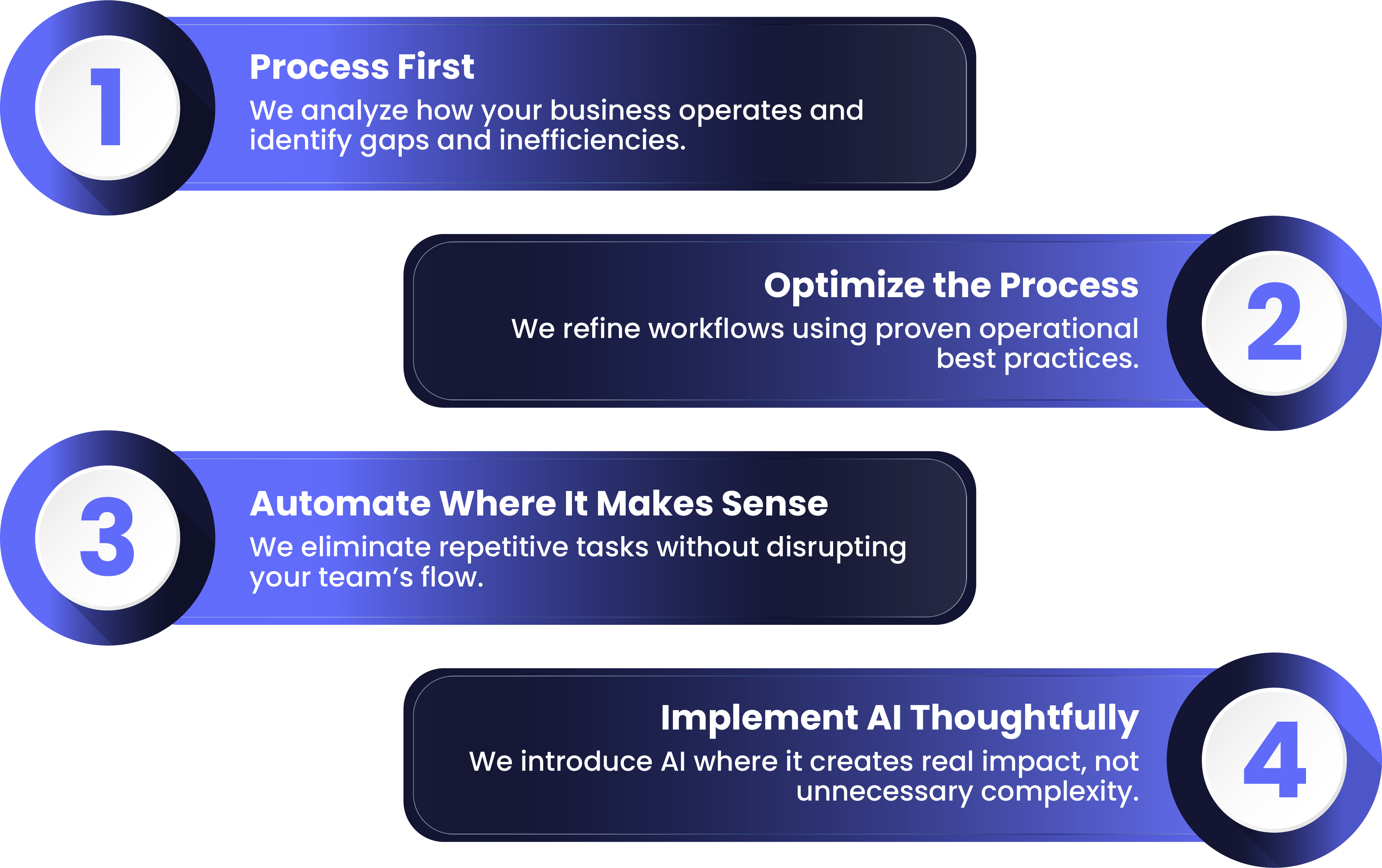
At SPCTEK.AI, we follow a simple and execution-focused method:
Tools & Solutions We Are Building
SPCTEK.AI is developing a suite of practical AI-powered tools and operational systems designed to help businesses understand, improve, and scale their processes.
Our focus is not on building complex platforms. We build solutions that are simple, usable, and directly connected to real business operations.
We encourage businesses to start by evaluating their current systems before adding more tools or automation. This helps teams understand where they stand today and what needs to be improved first.